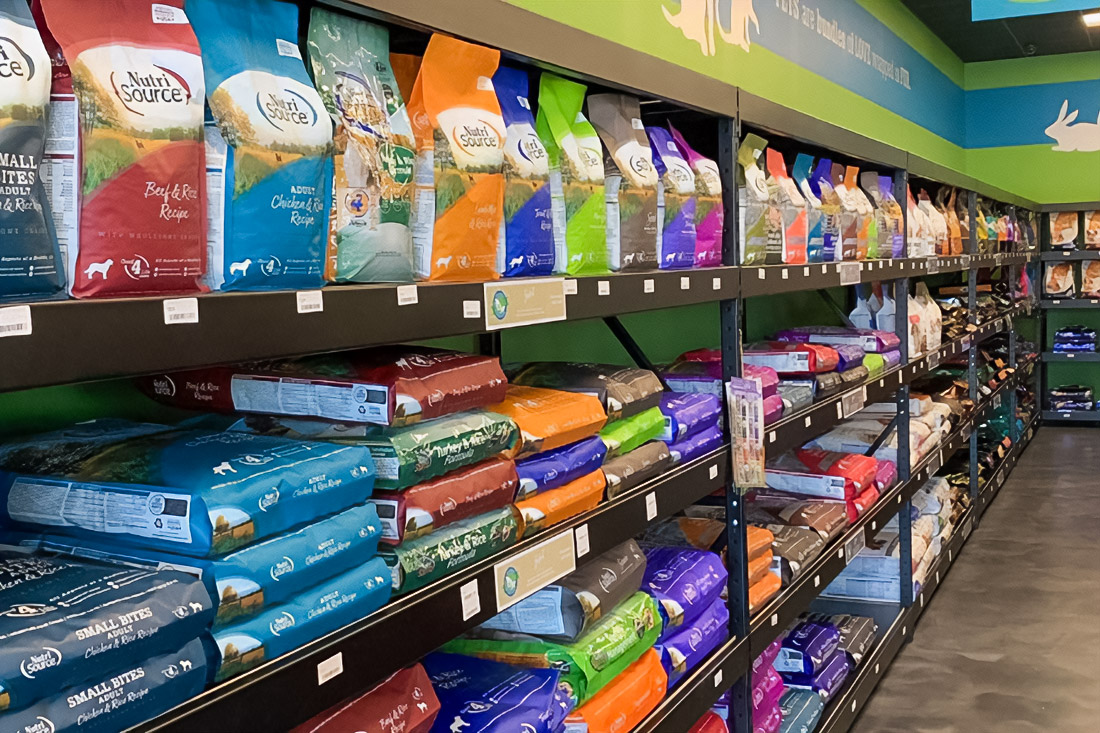
Grooming for many animals is not about comfort but about anxiety. Trembling, rapid breathing, refusal to enter the room, and defensive behaviour are not “bad behaviour” but stress signals. Understanding these signals and working with them through gentle handling, predictable routine, and desensitisation allows you not only to simplify the procedure but also to reduce the risk of long-term injury. This approach is especially important in professional pet care Dubai services, where animal well-being must come first.
Alarm Sgnals: What is Important to Notice First
Stress signals almost always appear in advance. The animal “speaks” through body language long before panic or reactivity occurs.
Key warning signs:
- Trembling and shaking when approaching a grooming site
- Excessive panting in a cool environment
- Whale-eyeing, lip-licking, yawning
- Refuse to enter the room or climb onto the table
- Growling, snapping, defensive behavior
- Behavior changes after the procedure: hiding, clinginess, digestive upset
In one of the analyses, 5 main signs of anxiety are highlighted, and it is important that they appear not only during the procedure but also long before it – even in the car or in the parking lot. This means that stress is formed as an association, not as a reaction to a specific moment.
Early recognition of stress signals reduces the likelihood of escalation and helps to avoid bringing the animal to the threshold, where the fight-or-flight response is activated.
Why Anxiety Occurs: Triggers and Stress Accumulation
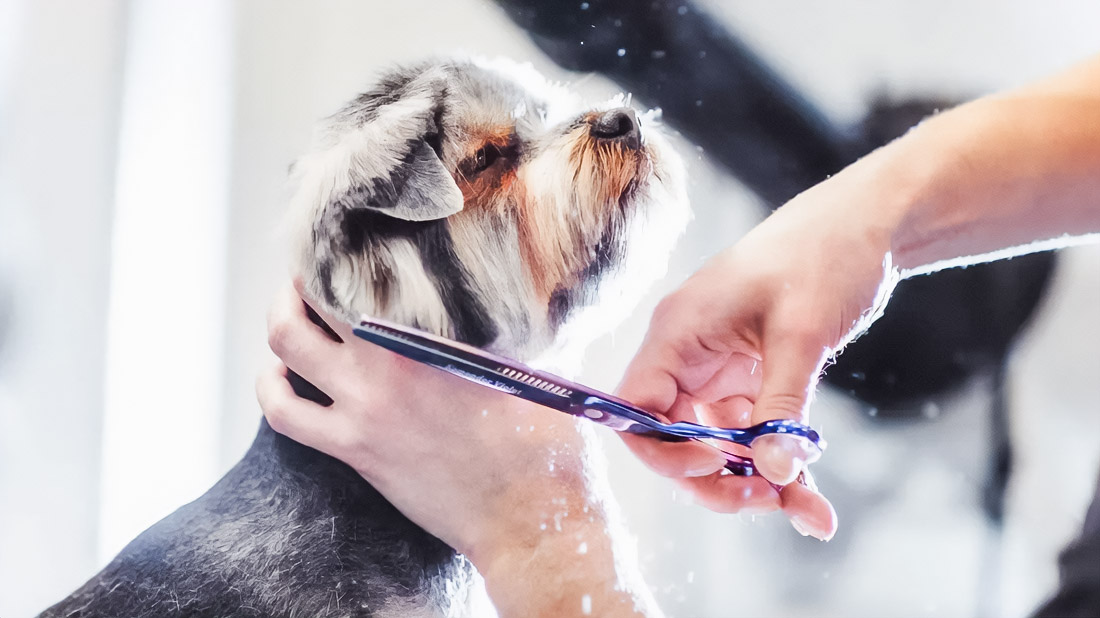
Anxiety rarely occurs “on its own”. More often it is a combination of factors:
- Noise clippers and dryer sensitivity
- Restrict sensitivity and contact with sensitive areas
- Past negative experiences, such as pain during nail trimming
- Unfamiliar environment and unfamiliar smells
- Trigger stacking – accumulation of stressors during one session
It is especially important to understand the trigger stacking mechanism. The animal can safely postpone the start of the procedure, but as stimuli are added – noise, water, and touch, it reaches the threshold. That is why many disruptions occur at the end, for example, during face work or nail trim.
Threshold and “Touch Budget”: How Not to Panic
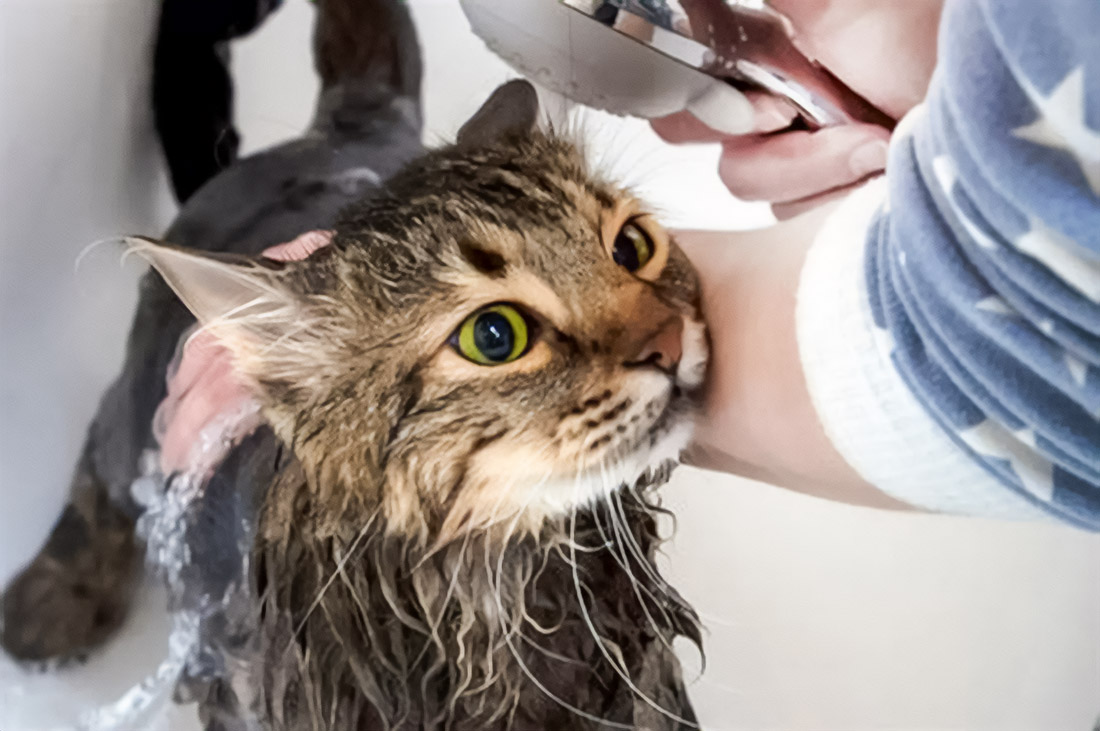
Each animal has a limited touch budget – the amount of contact it can withstand before going into stress. When this resource is exhausted, panic occurs, and further work becomes not only ineffective but also dangerous.
Critically important:
- Work below threshold
- Do micro-pauses
- Break the process into short steps
- Avoid prolonged continuous loads
Even a short pause, literally a 5-second break, can help reduce tension and prevent escalation.
Building Trust: The Foundation of Calm Grooming
Trust building is not a one-time action but a process. It is built through:
- Predictable routine
- Gentle handling
- Positive reinforcement
- Positive associations
Desensitisation and counter-conditioning are key tools. The point is to gradually introduce the animal to stimuli and form a positive reaction.
Examples:
- First show clippers without enabling
- Then add sound in the distance
- Then shorten the distance
- Use treats and rewards at each stage
With regular work, even difficult cases can improve. In one of the cases, noticeable progress was achieved in 6 weeks of consistent work.
Working With Sensitive Areas
The most common triggers:
- Paw-handling
- Nail trim
- Face work
- Ear handling
- Dryer
This is where defensive behaviour most often occurs. Important:
- Use micro-steps
- Do not hold by force
- Give control through cooperative care
- Stop until the threshold is reached
For example, in case of fear of claws:
- First, a short paw touch
- Then one claw
- Then pause
- Then repeat
This is how tolerance is formed without pressure.
The Role of the Environment: How Environment Affects Stress
The environment can either reduce anxiety or increase it.
What helps:
- Quieter workflow
- Noise reduction
- Non-slip surfaces
- Stable surface
- Minimization of visual stimuli
- Calm scheduling
In professional pet care Dubai settings, quieter time slots often lead to more relaxed and cooperative pets. Animals recorded during quiet hours show more stable behaviour. This is directly related to the level of general arousal.
Grooming Behavior: The Norm or a Signal
After the procedure, many animals:
- Become sluggish
- Go into hiding
- Avoid contact
This is not always a problem. This is often the result of a strong release of stress hormones and a subsequent “rollback”. The body is just recovering.
But if the distress persists for a long time, it’s worth it.
- Check the pain
- Discuss the condition with the veterinarian
- Rethink the approach to grooming
Why Regularity is More Important Than Infrequent Visits
Rare visits increase anxiety. Intervals of 6 months often lead to deterioration of the condition:
- Matting increases
- Pain increases
- Fear increases
Much more efficient:
- Maintain regularity approximately every 6 weeks
- Do shorter sessions
- Avoid overloading
It’s the same with visits to the vet – regularity every 3 to 4 months helps reduce stress through habituation.
Minimally Sufficient Care Instead of Perfect Results
The concept of minimum viable product (MVP) is an important principle.
- Hygiene and safety first
- Then the appearance
This reduces the risk of panic and helps to maintain trust. Trying to “make it perfect” often leads to the opposite result – increased fear.
When You Need Specialist Help
If observed:
- Severe panic
- High bite risk
- Dramatic deterioration of behavior
- Suspicion of pain
You need to connect:
- The veterinarian
- Behavioral specialist
Sometimes a comprehensive approach is required: behavioural work + adjustment of conditions + medical support.
Grooming should not be a challenge. When stress signals are taken into account, gentle handling is used, and a predictable routine is built, the animal gradually forms positive associations.
Key principles:
- Early signal recognition
- work below the threshold
- reduced trigger stacking
- formation of trust
- Regularity and gradualness
And most importantly, alarms are not a problem but a communication. The sooner they are noticed, the easier it is to make grooming safe and calm for everyone.

Я отмечен наградами писатель-фрилансер, специализирующийся на финансовых темах. Я имею в виду более чем десятилетний опыт работы, о котором упоминалось в The Wall Street Journal.